Eastern Redbud: Ideal on residential lawns. Grows 1-1.5’ yearly. Can reach 20-30’ tall. Dark green, heart shaped leaves changing to bright yellow in the fall. Large pink-purple flower clusters in the spring before foliage emerges. Prefers well-drained, nutrient rich soil with a pH over 7.5. Full sun or partial shade. https://www.arborday.org/trees/treeguide/treedetail.cfm?itemID=912


White Flowering Dogwood (Cornus Florida): Grows 20-25 feet at maturity, with a medium growth rate. Prefers partial shade, requires about 4 hours of sunlight a day. The white dogwood is very versatile, growing in acidic, loamy, moist, rich, sandy, well-drained and clay soils. It prefers moist conditions. This tree blooms April-May with distinct white flowers. It produces glossy red fruit eaten by birds and other mammals. In the fall, leaves provide great color, turning red-purple. https://shop.arborday.org/treeguide/280


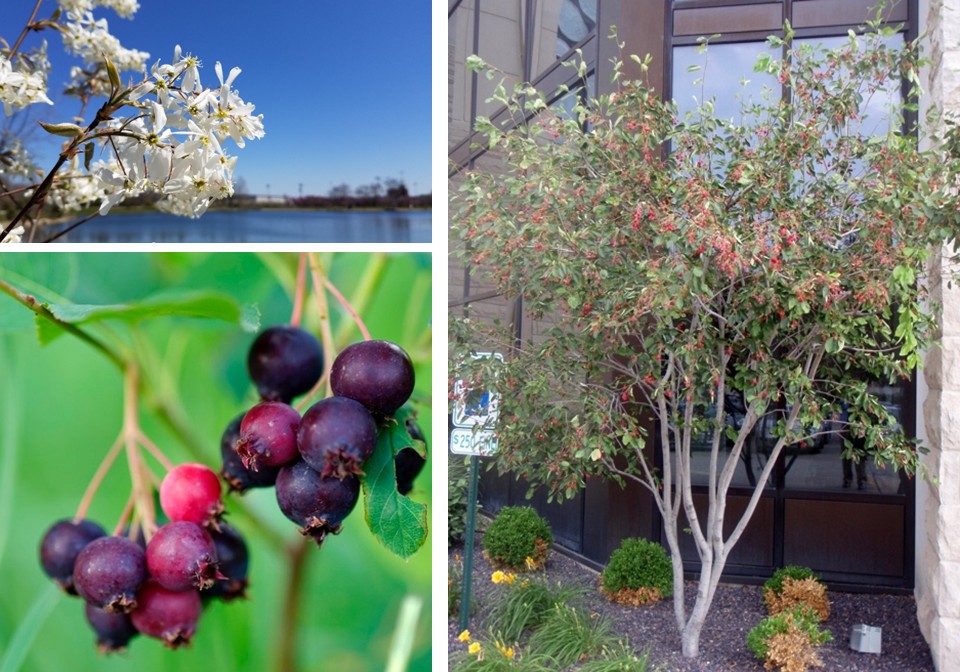
Serviceberrry tree: This native service-berry is usually a multiple-trunked tree or shrub, 15-25 ft. tall, with dense, fine-textured branching. The white blossoms, which can be spectacular in mature specimens, develop from pink buds in spring. Bearing sweet berries turning from red to purple or nearly black. Blue-green summer foliage can become orange or red in fall. The bark is smooth and slate-gray with white, longitudinal stripes. Very easy to grow and provides year-round interest. Berries are edible. https://plants.ces.ncsu.edu/plants/amelanchier/
Red Osier Dogwood: Ornamental shrub which brings several seasons of color. Red/bright yellow stems with white flowers in spring, rich green leaves turning purplish red in the fall/winter. Reaches 10’ tall. Grows vigorously in moist, swampy sites; fibrous roots hold soil in place. For best color plant in full sun. May be pruned every 1-3 years. Great hedges; plant 5’ apart; the shrub will fill in within a few years. The redosier dogwood provides dense cover for wildlife. The white berries are eaten by at least 18 species of birds including ruffled grouse, bobwhite quail, wild turkey and gray catbird. The twigs and foliage are browsed by elk, deer, moose, rabbits and chipmunks. https://shop.arborday.org/redosier-dogwood-2

Buttonbush: The Buttonbush is a moisture-loving specimen native to North America and often found growing along streams, wetlands, edges of ponds, and swamps. It can be grown as a shrub or small tree and features spherical white flower clusters that resemble pincushions or buttons. These fuzzy, spiky looking blooms are made up of dozens of tiny tubular flowers. The Buttonbush is a magnet for native bees, butterflies, while providing a nesting habitat for birds and aquatic animals. It is a deciduous shrub native to North America. It produces nectar-rich white flower clusters in the summer. It is attractive to both pollinators and wildlife such as ducks and other waterfowl. The mature height is 5-12 feet and the mature spread is 4-8 feet and the shape is rounded.https://shop.arborday.org/buttonbush

Magnolia (Sweetbay): This tree flowers late in the spring, avoiding much of the frost that can spoil a blooming tree’s beauty. It also attracts a wide variety of songbirds with its fall fruit. The bark is smooth and gray. Grown for its large, conspicuous, scented flowers, for its clean, attractive foliage, and for its fast growth. It grows to a height of 10–20′ and a spread of 10–20′ at maturity. Full sun and partial shade are best for this tree, meaning it prefers a minimum of four hours of direct, unfiltered sunlight each day. This tree grows at a medium to fast rate, with height increases of anywhere from 13″ to more than 24″ per year. https://www.arborday.org/trees/treeguide/treedetail.cfm?itemID=865

Scarlet Oak: Lustrous dark green summer leaves turn brilliant red and scarlets in the fall, lasting 3-4 weeks. Adaptable but prospers in drier soils. It grows to a height of 40-50 feet. Scarlet Oak acorns are an important food source for many large songbirds, wild turkeys, grouse, squirrels and white-tailed deer. The tree provides nest sites for birds, food for breeding birds, food for wintering birds, food for spring and fall migrant birds, food for mammals, food for caterpillars; it is a pollen producer, a nectar producer, and sequesters carbon. It is a fast-growing oak. https://shop.arborday.org/scarlet-oak

River Birch: This tree is often used for landscaping for its graceful drooping limbs and attractive color. A fast-growing, deciduous tree grows under full sun to full shade and best in moist soils. It’s a valuable source of erosion control as well. It produces flowers in spring, leaves turn bright yellow in fall with a silvery trunk in winter. Without pruning, it grows several trunks and can reach over 50’ in height. Once mature, it develops a cinnamon colored bark that curls and peels. Seeds are a food source for many songbirds. https://shop.arborday.org/treeguide/173

Tulip Poplar: The tulip poplar is a native large deciduous tree that may grow 90 to 120 feet tall and takes its name from its greenish-yellow heartwood and attractive tulip-like flowers. This tree prefers moist, well-drained soil, full sun, and slightly acidic soil. It is pH and partial-shade adaptable. This tree is sensitive to heat and drought and has a low compaction tolerance. The tulip poplar can be pruned and kept at shrub size by cutting them to the ground every 2-3 years. The tulip poplar is a favorite nesting site for birds, and the flowers attract butterflies and hummingbirds. https://plants.ces.ncsu.edu/plants/liriodendron-tulipifera/

Elderberry: This shrub is 5–12 ft. tall, 3–6 ft. wide. The bush produces bluish-black fruit in bunches that are used in wines, juices, jellies, and jams. The berries themselves are quite bitter, so they are rarely eaten by themselves. Growing elderberries is not all that difficult. They can tolerate different conditions like poor soil or overly wet areas. Elderberries cannot tolerate drought. When planting elderberry bushes, you should note that the berries will grow on the bushes the first year you plant them. The berries will do better the second year. Elderberry planting is done best in well-draining, loamy soil. Sandy soils should be improved by adding a few inches (5 to 10 cm.) of organic matter. When elderberry planting, make sure to allow for cross-pollination. Therefore, two or more cultivars can be planted near each other. Plant them one meter apart (3 ft.) in rows that are four to five meters (13 to 16.5 ft.) apart. https://www.thespruce.com/american-elderberry-sambucus-canadensis-3269208

American Plum: The American plum is a small tree that is native throughout much of the central United States. It produces 1”, reddish-purple plums that are best suited for jams or jellies. Though it does grow fruit, this tree is typically planted for ornamental and wildlife value. It produces small, reddish-purple plums that ripen in July and August. It displays white blooms in early spring and attracts songbirds, pollinators, wild turkeys, quail, and deer. Plum trees provide food and cover for butterfly larva, birds and mammals. The mature height is 10-12 feet, while the mature spread is 15-25 feet, with a medium to fast growth speed and a rounded shape. It prefers full sun, partial sun/shade, or shade. It prefers soil that is clay, loamy, moist, well-drained, slightly acidic. https://shop.arborday.org/american-plum

